
The United States can vote on big infrastructure spending, argue over who gets credit, and announce massive plans, but one problem doesn’t go away: who’s going to do the work? In this message from Mike, the voice behind America’s Blind Tradesman and national spokesperson for the Million Job Movement (MJM), the warning is blunt. If the country keeps ignoring the skilled trades shortage, the fallout won’t just mean bumpy roads and delayed repairs, it could push America back toward a pre-industrial way of life.
This post breaks down the core argument: the labor gap is already slowing disaster recovery and everyday repairs, and it also creates a serious national security weakness.
The hidden crisis behind every infrastructure plan
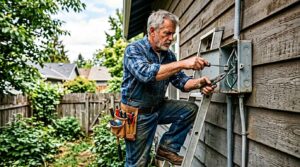
Mike frames the situation as something most people don’t talk about, even though it touches every part of daily life. Roads, bridges, ports, airports, housing, power systems, and disaster rebuilding all depend on skilled trades workers. When the worker base shrinks faster than new workers enter, repairs stack up like unpaid bills.
What makes the topic feel urgent is that it’s not a niche problem. National leaders across party lines, including President Trump, Nancy Pelosi, Mitch McConnell, and Senator Schumer, have agreed on the idea of spending about $2 trillion on infrastructure upgrades because so much of the country is in disrepair.
Still, money alone doesn’t pour concrete, replace wiring, rebuild homes, or reopen factories. The biggest question comes back again and again.
A national infrastructure plan without skilled workers is a plan that can’t be executed.
Mike points to two simple stats that explain why this keeps him up at night:
- The US is roughly 7 million workers short in the skilled trades.
- The average electrician is about 53 years old, which signals a retirement wave ahead.
In other words, even maintaining today’s level of repair work is getting harder. Expanding the pace to match a huge infrastructure bill is even more difficult.
Why Washington’s trade school solution won’t arrive in time
A common response from Washington is predictable: fund trade schools like the country did decades ago, then wait for a new pipeline of skilled workers to appear. Mike argues the timeline makes that approach too slow to prevent serious damage.
First, political fights slow down action. Even if everyone agrees infrastructure matters, getting a bill through Congress, signed, and funded can take years. Then the money has to roll out through layers of government, from federal agencies to states, counties, and school districts. Each layer asks for plans, reports, and approvals.
Even after the money arrives, program design matters. Mike worries that many programs end up being built and managed by people who are far removed from what the trades actually require. When training is shaped mainly by systems and paperwork, students can graduate without real readiness for field conditions, job-site safety, or the pace of professional work.
He lays out the longer-term reality: even if all the pieces move forward, the country could be looking at 20 to 25 yearsbefore enough new workers replace retiring tradespeople. That doesn’t fix today’s backlog, and it doesn’t prevent tomorrow’s.
The scariest part is the compounding effect. While the country waits, older workers retire, disasters keep happening, and infrastructure keeps aging. The system doesn’t stand still. Mike’s warning is that America is already behind, and delay only widens the gap.
Disaster recovery shows the shortage is already here
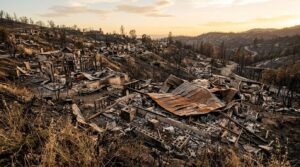
Mike’s argument isn’t only about the future. He points to disaster recovery as proof that the skilled labor shortage is already slowing America down. If the country can’t rebuild efficiently after major storms, fires, floods, and tornadoes, then how can it handle large-scale infrastructure upgrades at the same time?
The examples he cites are sobering, because the timelines stretch across years, not months. To keep it clear, here’s how he describes the pattern.
A quick snapshot of the disasters and rebuild lag he highlights:
| Disaster | Year referenced | What he says about recovery |
| Hurricane Sandy | 7 years ago (at time of recording) | People still aren’t back in their homes, even in the resource-rich Northeast |
| Hurricane Katrina | 2005 (14 years ago at time of recording) | Parts of New Orleans haven’t finished being torn down, let alone rebuilt |
| California fires | 2017 | 10,000 structures destroyed, only 399 homes rebuilt at the time of his research |
| Midwest flooding | 2 years ago and the past year | Homes destroyed, rebuilding still needed |
| Gulf hurricanes (Florida to Texas) | Last 5 to 6 years | Ongoing damage and rebuilding pressure |
| Tornadoes (South and Midwest) | Recent | Entire towns wiped out, requiring major rebuilding |
The takeaway from his list is simple: millions of people aren’t back to square one yet, and new disasters keep adding to the workload. This isn’t just an inconvenience. When repairs don’t happen, communities stay stuck in temporary living situations, local economies stall, and the cost to rebuild often rises over time.
Everyday infrastructure is deteriorating, and the costs keep adding up
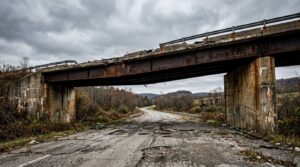
Disasters make headlines, but Mike emphasizes that ordinary infrastructure is also in trouble. Deterioration is happening in plain sight, and it brings real costs long before anything collapses.
He points to roads that have degraded so badly they cost the trucking industry billions each year. That cost isn’t abstract. Poor roads accelerate wear on vehicles, cause direct damage, and increase the odds of crashes. At the same time, the general driving public pays in repairs, delays, and safety risks.
Bridges are another pressure point. Some are closed or restricted because officials worry they may fail. Others can be missed until they do fail. Either way, each closure forces detours, slows shipments, and pushes more traffic onto already stressed routes.
Mike also calls out airports and seaports. In his view, some are 50 years behind the times, relying on older technology and systems that don’t match modern travel demands. He argues that outdated flight patterns and infrastructure become a hazard for the traveling public.
Then there’s housing, especially in inner cities. He says millions of Americans still live in substandard housing that should have been torn down decades ago. If a community can’t replace unsafe housing at scale, the results show up in health outcomes, safety problems, and reduced opportunity.
Throughout all of this, one point repeats: leaders may eventually vote money into existence, but the country still has to answer the labor question. Who does the work when the workforce is already millions short?
Why Mike calls this a national security threat
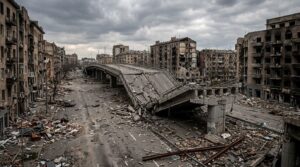
Mike’s strongest claim is that the skilled trades shortage has become a matter of national security. To explain why, he uses a war scenario with two fictional countries. The names are intentionally sarcastic, but the logic is serious.
In his scenario, if an enemy wanted to cripple a nation’s ability to fight or recover, they would target key systems that keep society functioning. He describes a chain reaction that looks like this:
- Shut down airports and ports to disrupt access to critical resources.
- Destroy roads, bridges, and railways so supplies can’t move where they’re needed.
- Cripple factories and production because people can’t get to work, repairs can’t happen, and manpower is limited.
Then he asks the core question: how is that different from what’s happening now?
The comparison lands because the effect is similar. When a country lacks the workers to repair and rebuild, it loses the ability to bounce back. Over time, that weakness compounds, because every delay makes the next repair more expensive and harder to coordinate.
Mike argues the result could be a slide backward, not just a slowdown. If infrastructure, housing, transport, and production systems keep breaking faster than they can be fixed, then the lifestyle Americans expect becomes difficult to maintain. The video description echoes the fear: the United States could be one generation away from third-world conditions if people ignore the warning signs.
Acting now, and what the Million Job Movement claims is possible
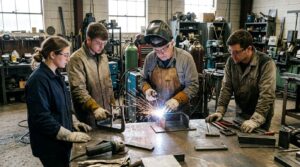
Mike’s urgency comes from time. He points out that older tradespeople won’t be available forever to train apprentices. In 15, 20, or 25 years, many of today’s experienced workers will be in their 80s or 90s. By then, they likely won’t be taking on apprentices or teaching the next generation on the job.
That’s why he argues the country can’t wait for a slow, multi-decade cycle of policy changes and school programs. He says the fix needs to start now, and he tees up a plan tied to the Million Job Movement (MJM). According to him, the goal is to improve the situation within five to eight years, rather than waiting 20 to 25.
He doesn’t explain the full plan here, since he says that’s coming in the next video. Still, he’s clear about the direction: build awareness, mobilize people, and treat skilled trades as essential work that keeps the country running.
For readers who want to follow his work and join his effort, he invites people to join his crew through Join Mike’s Crew at JoinMikesCrew.com.
Conclusion: the first step is admitting the shortage is real
Infrastructure spending makes headlines, but skilled labor makes projects real. Mike’s message is that America faces a skilled trades shortage so severe that it affects disaster recovery, day-to-day safety, and even national security. If the country waits for slow solutions, retirement and repeated disasters will push the gap wider. The call is to treat skilled trades as a priority right now, while experienced workers can still pass on what they know. As Mike puts it, “I don’t want to be a third-world nation, how about you?”
Recent Comments