

How to Get Vocational Rehab for Free (Or Nearly Free): A Complete Cost & Application Guide
Will vocational rehab cost you money, and where do you start if you want a trade career? State vocational rehabilitation programs help eligible people with disabilities prepare for and find work.
However, services and costs depend on your employment plan and your state’s rules. You don’t need every answer before applying, but you do need written approval before committing to training costs.
Key Takeaways
- State VR programs offer disability employment services, but coverage and participant costs vary.
- Your individualized plan for employment may include trade training, tools, transportation, or accommodations tied to an approved work goal.
- Ask about approved providers, funding limits, and any personal costs before enrolling or paying.
- Start with your state agency, name your trade goal, and keep written records. Eligible students moving from school to work may receive transition services.
Is Vocational Rehab Really Free? What It May Cover
There’s no nationwide rule making every requested vocational rehabilitation service free. States may require financial participation for some services, subject to federal VR financial participation rules. Funding also depends on your approved employment plan.
Here’s the honest truth most people don’t know: Vocational Rehabilitation (VR) is largely free for those who qualify — and a whole lot more people qualify than you’d think.
Vocational Rehab is a federally funded, state-administered program designed to help people with physical, mental, or cognitive disabilities get back to work — or find meaningful employment for the first time. And the best part? The government foots most (or all) of the bill.
What Does Vocational Rehab Actually Cover for Free?
When you’re approved, VR can cover:
– Job training and education — including college tuition, certifications, and trade school
– Career counseling and guidance
– Resume writing and job placement assistance
– Assistive technology — think specialized software, wheelchairs, hearing aids
– Transportation costs to get you to training or work
– Medical and psychological evaluations
– Workplace accommodations support
So… Is There Any Cost at All?
Here’s where it gets nuanced. While the core services are free for most participants, some states apply a financial needs test for certain services — meaning if your income is above a specific threshold, you *might* be asked to contribute to some costs.
However — and this is important — no one is turned away purely based on inability to pay. The program prioritizes people with the most significant disabilities first, and financial hardship is always factored in.
Who Qualifies for Free Vocational Rehab?
To be eligible you generally need to:
1. Have a *ocumented physical, mental, or cognitive disability
2. Have a disability that creates a barrier to employment
3. Be able to benefit from VR services (i.e., employment must be a realistic goal)
4. Be a U.S. citizen or eligible non-citizen
How to Apply for Vocational Rehab — Step by Step
Getting started is simpler than most people think:
Step 1: Find Your State VR Agency
Every state has its own VR office. Search “[Your State] Vocational Rehabilitation” to find your local office and contact information.
Step 2: Submit Your Application
You can apply online, by phone, or in person. The application collects basic personal information and details about your disability and employment goals.
Step 3: Eligibility Determination
A VR counselor will review your application and may request medical documentation. This process typically takes **up to 60 days.**
Step 4: Develop Your Individualized Plan for Employment (IPE)
If approved, you and your counselor create a customized roadmap outlining your employment goal and the services you’ll receive — all at little to no cost to you.
Step 5: Begin Your Services
Once your plan is approved, your services begin. Your counselor stays with you throughout the process.
Pro Tips to Maximize Your Free VR Benefits
– Be specific about your employment goals — counselors can do more when they know exactly where you’re headed
– Gather your medical documentation early — it speeds up the eligibility process significantly
– Stay engaged and communicate regularly with your counselor
– Appeal if denied — many first-time denials are successfully overturned
Bottom Line
Vocational Rehab is one of the most underutilized free government programs available today. If you have a disability that’s making it hard to find or keep a job, there’s a very good chance you can access **thousands of dollars worth of training, education, and support — completely free of charge.**
Don’t leave that money on the table. Apply today.
Additional Considerations:
Trade school, tools, travel, and accommodations may be part of the plan
Depending on your plan, supports may include occupational training, books, tools, safety gear, transportation, assistive technology, rehabilitation technology, disability-related accommodations, disability employment services, and job placement services. These are possibilities, not guaranteed benefits.
For example, ask whether welding training requires accessible instruction or adapted equipment. Your counselor can review which supports fit your employment goal.
Before enrolling or paying, get written confirmation of the approved provider, covered costs, and payment arrangements. Don’t assume VR will reimburse an expense you paid without approval.
Ask your counselor what you may have to pay
Some states use financial-needs rules to determine participant contributions for certain services. During vocational counseling, ask about fees, approved vendors, funding limits, and expenses you’ll need to cover yourself. Request the answers in writing.
Federal rules prohibit financial-needs testing or required contributions for VR services for people determined eligible for SSI or SSDI. However, that protection doesn’t approve every requested service. Training, equipment, and other supports still require planning and authorization.
How Do I Access Vocational Rehabilitation for a Trade Career?
Generally, eligibility requires a physical or mental impairment that creates a substantial impediment to employment. You must also need VR services to prepare for, obtain, keep, regain, or advance in work, and be able to benefit through employment.
People receiving supplemental security income (SSI) or social security disability insurance (SSDI) who intend to work are generally presumed eligible. Even so, services still require planning and approval.
Find your state agency and request services
Use the Rehabilitation Services Administration’s state VR agency directory to find state vocational rehabilitation agencies and contact the appropriate one to request an application. Some states have a separate agency serving blind people.
Be ready to share information about your disability, work goals, and support needs. Ask what records the agency needs rather than delaying your application while gathering everything.
The agency generally makes an eligibility determination within 60 days of starting the application process. If an extension is necessary, ask about the specific extension you’re agreeing to.
Build a plan around the trade you want to enter
When the agency can serve you, work with your counselor on an individualized plan for employment (IPE).
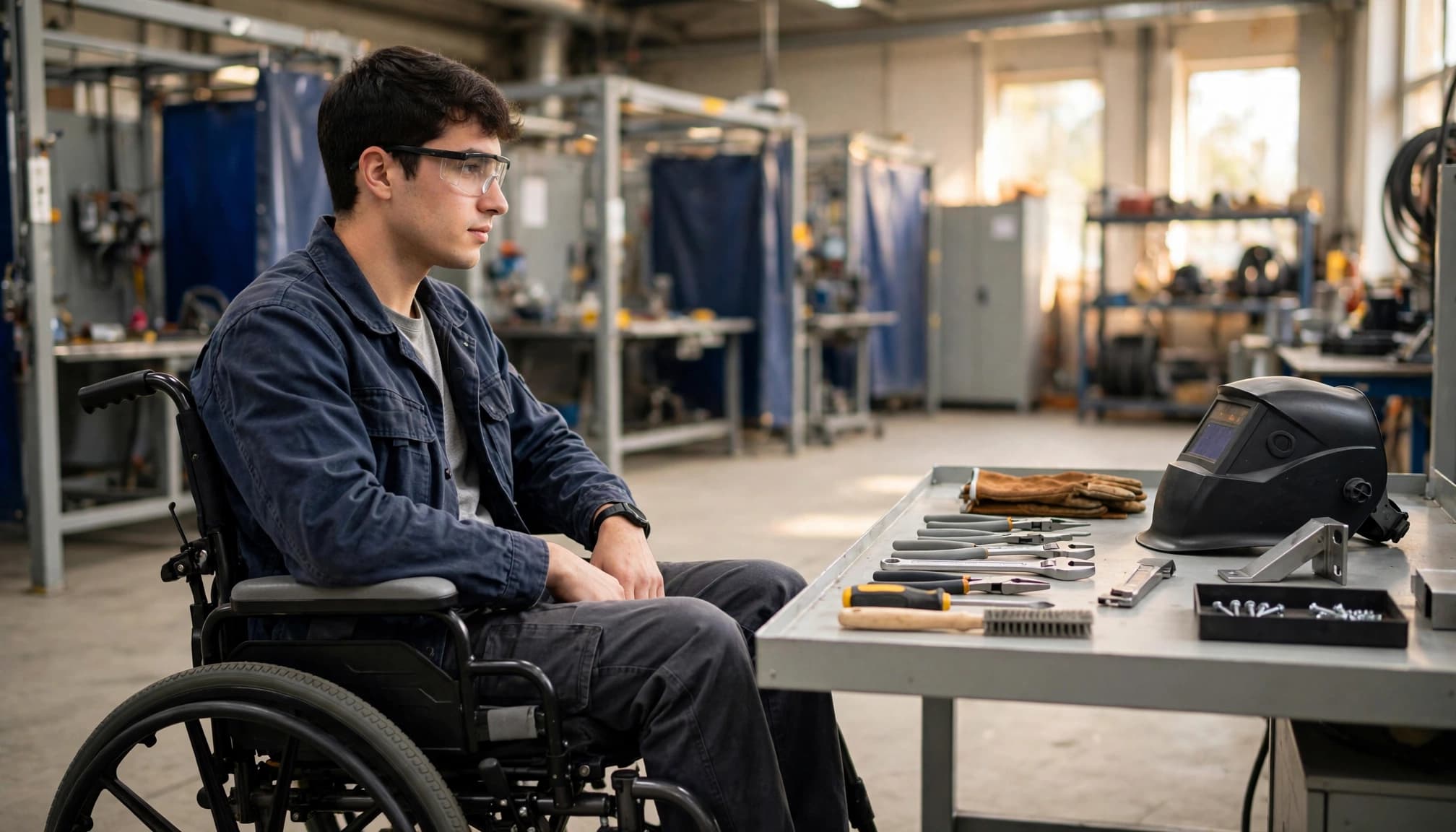
Name a career goal, such as electrical work, welding, or HVAC, and discuss how it connects to jobs in the competitive labor market. Then discuss training requirements, tools, transportation, accommodations, and job placement. Students moving from school to work may also need transition services.
Your informed choice matters, including your preferences for services and providers. Ask how each proposed service supports your goal, and confirm approval before spending money.
What If There’s a Wait, a Denial, or You Receive Social Security?
Waiting lists, appeals, and Ticket to Work
Limited funding may lead a state to use an Order of Selection. This prioritizes people with the most significant disabilities, so eligibility doesn’t always mean immediate services.
If you’re denied or disagree with a decision, request it in writing with appeal instructions. The Client Assistance Program can explain your rights and offer advocacy. Centers for independent living are separate organizations that may also help you find disability resources.
The ticket to work program is a separate, free, voluntary program for eligible SSI or SSDI beneficiaries ages 18 through 64. Its free services don’t establish a blanket rule for state VR funding decisions. Ask your VR counselor whether supported employment is appropriate and authorized. Confirm whether long-term job supports are part of your plan.
Learn More When You Join the Million Dollar Movement
Explore the Million Dollar Movement for encouragement and practical insight into pursuing a skilled-trades career. Mike DeZinno’s experience as America’s Blind Tradesman offers another perspective on working in the trades with a disability.
That encouragement is separate from decisions about what VR will fund.
Frequently Asked Questions
Can I choose the trade school or training provider?
You can discuss your preferred school or provider with your counselor. A community rehabilitation program may be an option if your employment plan and state rules approve it. Confirm approval and payment before enrolling.
Can I apply for VR if I already have a job?
Yes. VR may help you retain or advance in employment, or prepare for and find work. Ask your state agency whether your work goal and support needs qualify for services, including long-term job supports.
Does VR help students transition from school to work?
Some students may receive transition services to prepare for work. Availability depends on the person’s circumstances and state program.
Will applying for Ticket to Work stop my disability benefits?
Applying doesn’t mean your benefits immediately stop. Social Security’s Ticket to Work overview explains the voluntary program. Earnings and benefits rules depend on your situation, so seek benefits counseling before making work decisions.
What should I do if I don’t hear back from the agency?
Follow up with the assigned office and keep notes and copies of application materials. Ask about the eligibility timeline and any agreed extension. If the delay raises concerns, your state’s Client Assistance Program may explain your options.
Start With Your Trade Goal and Written Approval
Vocational rehab isn’t automatically free in every state, but it may pay for approved services tied to an employment goal. The important step is knowing what your plan covers before committing.
Share your vocational goals, including the trade you want to pursue, with your state agency. Ask which career development services and long-term job supports your approved plan includes, and how they support your employment outcomes. Get costs and approvals in writing before committing.
Recent Comments